Julian Geiger
Agile Team Lead Digital Solutions
Uhlmann Pac-Systeme GmbH & Co. KG
Uhlmann Pac-Systeme GmbH & Co. KG
Standardsoftware stößt in der Verpackungstechnik oft an ihre Grenzen: Hochspezialisierte individuelle Anlagen, hohe Taktraten, strenge Regulierung (z.B. Pharma, Food) und eine gewachsene Softwarelandschaft. Der Mehrwert durch Software entsteht, wenn Funktionen, Daten und Prozesse zusammespielen und miteinander richtig kommunizieren.
In der Praxis zeigen sich typische Herausforderungen:
Der gewinnbringende Nutzen für Hersteller und Kunden entsteht erst, wenn Daten durch passgenaue Software vollumfänglich nutzbar werden – z.B. durch Track & Trace entlang der Lieferkette, KI-gestützte Qualitätsprüfung inline oder flexibel anpassbare HMI Steuerungen für digitale Bedienkonzepte.
We develop IIoT solutions tailored to your requirements — not within the limits of a standard product.
The focus is on understandable, maintainable and expandable code that can be operated securely even after years.
Many years of experience with C#/.NET, interfaces, APIs and business systems form the basis for robust IIoT architectures.
Maintainability, security and scaling are considered from the outset — not just after initial start-up.
Individualsoftware für die Verpackungstechnik wird dort wichtig, wo Maschinensteuerung, Linienintegration, Serialisierung und digitale Services in gewachsenen Systemlandschaften zusammenlaufen müssen.
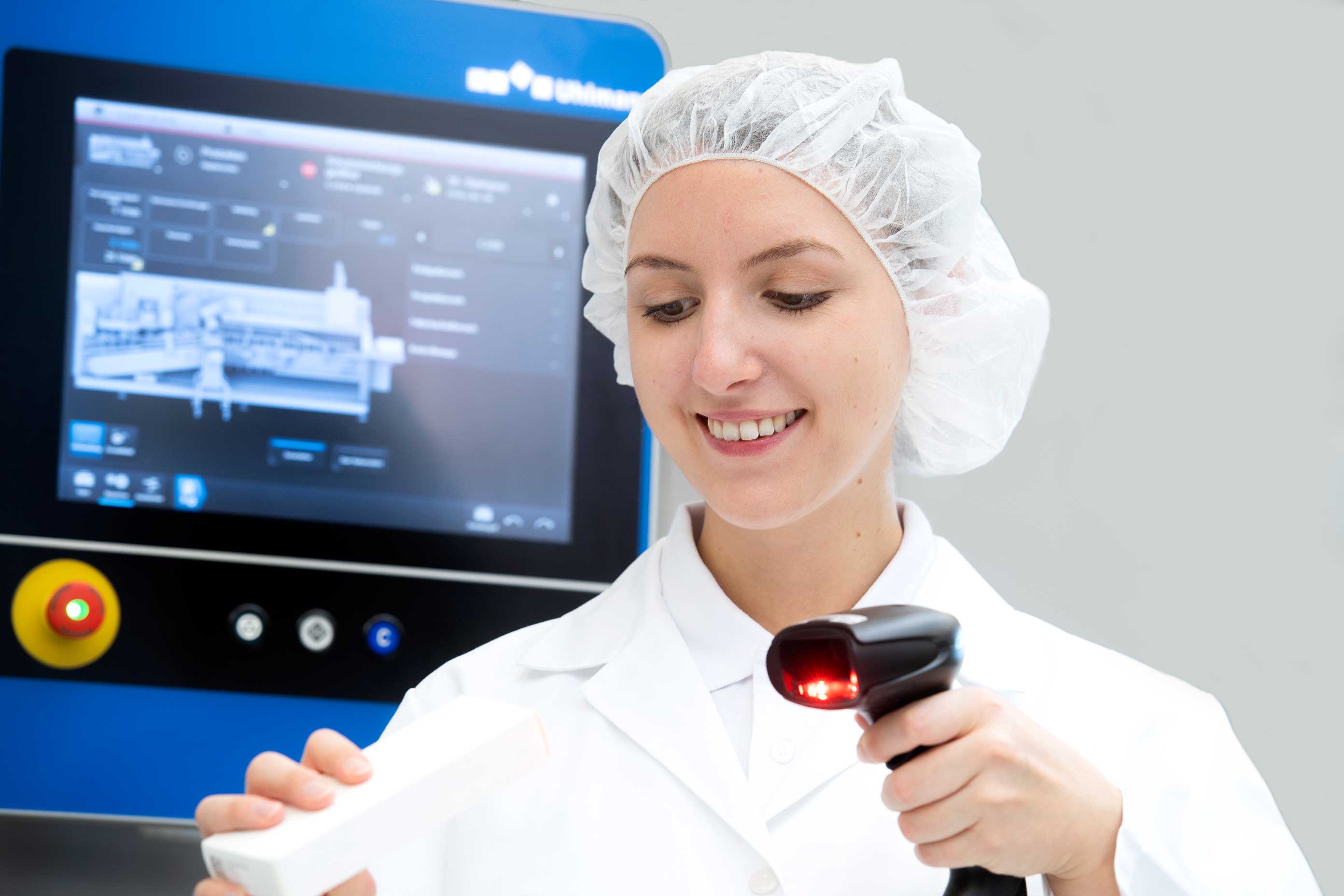
Eindeutige Kennzeichnung und Nachverfolgung von Produkten entlang der gesamten Lieferkette – bis hin zum Endverbraucher. Wie wir den Verpackungsspezialisten Uhlmann bei der Entwicklung hochsensibler Track & Trace Software unterstützen, zeigt unsere Referenz Uhlmann Pac-Systeme.

Transparenz über Maschinenzustände, Linienstillstände oder Abweichungen als Grundlage für operative Entscheidungen – von der Einzelmaschine bis zur kompletten Verpackungslinie.
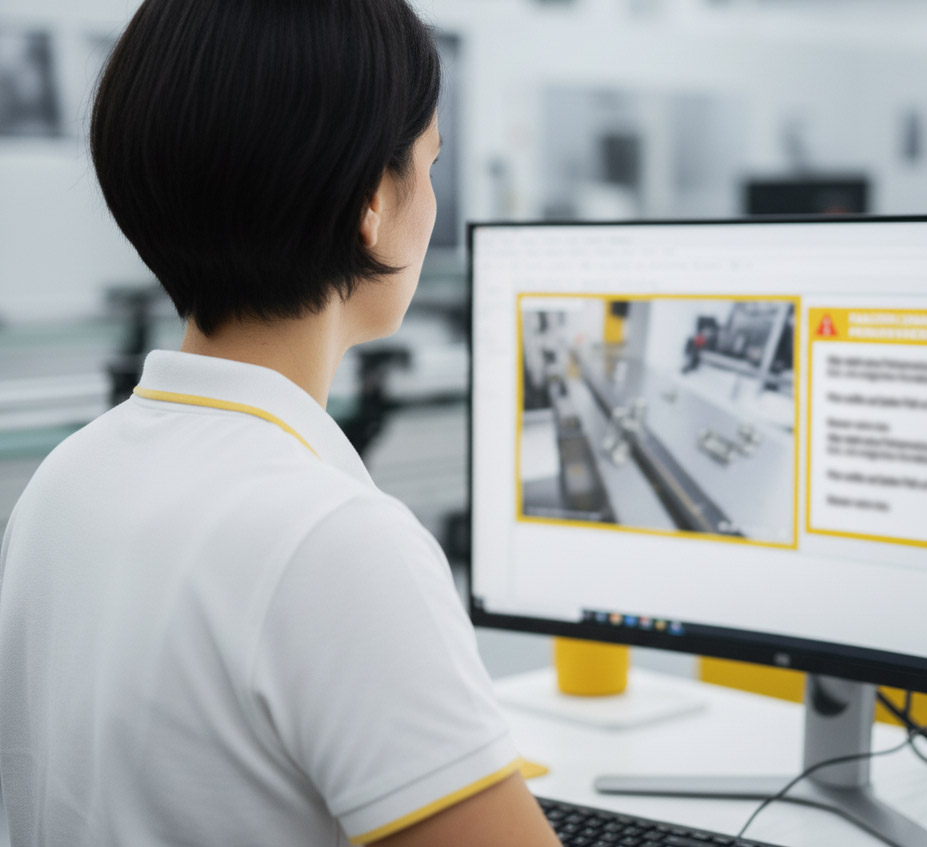
Automatisierte Fehlererkennung und IO/NIO-Sortierung inline – mit Kamerasystemen, Deep-Learning-Modellen und Echtzeit-Visualisierung. Wie KI-gestützte Analysen die Fehlerquote in der Fertigung minimieren und Prüfpersonal entlasten, zeigt unsere Case Study zur KI-gestützten Prozesskontrolle.

Nutzung von Betriebsdaten zur besseren Planung von Wartungsmaßnahmen und zur Reduktion ungeplanter Ausfälle – besonders kritisch bei hohen Taktraten und regulierten Umgebungen.Verknüpfung von Produktions- und Qualitätsdaten zur Ursachenanalyse und Prozessverbesserung. Erfahren Sie in unserer Case Study zur Prozesskontrolle, wie KI-gestützte Analysen die Fehlerquote in der Fertigung minimieren.

Together, we analyze your processes, identify IIoT use cases and evaluate their business case — as a sound basis for deciding on your IIoT investment.
We design your IIoT solution as an intersection of business, technology and user requirements. To do this, we detail use cases, define interfaces and create a concrete implementation plan.
In Dual Track Agile entwickeln wir Ihre Individualsoftware nach Clean Code Standard – iterativ, nutzerzentriert und mit kontinuierlichen Releases, die frühzeitig Mehrwert in Ihrem Betrieb schaffen.
We operate and maintain your IIoT solution, monitor system performance and ensure sustainable, secure operation with regular updates and technological development.
Ein solches Projekt lohnt sich, wenn Sie messbare Verbesserungen erreichen – etwa bei Verfügbarkeit, Servicekosten, Qualitätsquoten oder bei transparenterem Betrieb von Maschinen und Linien. Typische Effekte: weniger ungeplante Stillstände, automatisierte Qualitätsprüfung statt manueller Kontrolle, oder lückenlose Rückverfolgbarkeit entlang der Lieferkette.
Häufige Risiken sind unklare Ziele, unzureichende Einbindung bestehender Systeme (Steuerung, MES, ERP, SAP EWM) und zu optimistische Integrationsannahmen. Die klare Definition von Anforderungen und Schnittstellen sowie ein technisch belastbares Konzept reduzieren Risiken erheblich. Pilotprojekte mit überschaubarem Umfang helfen, das Richtige richtig zu entwickeln.
Es ist kein reines IT-Thema: Fachbereiche liefern Maschinen-Know-how und Prozessanforderungen (z.B. Formatwechsel, Serialisierung, Qualitätsprüfung). Die IT verantwortet Integration, Sicherheit und Betrieb. Gewinnbringende Projekte entstehen dort, wo beide Seiten früh zusammenarbeiten – wie bei Uhlmann, wo generic.de als voll integrierter Teil des Dev-Teams agiert.
Viele Lösungen knüpfen an vorhandene Systeme an – etwa Steuerung, MES, ERP oder SAP EWM. Bei der KI-gestützten Prozesskontrolle läuft die Lösung beispielsweise als Windows-Dienst im Produktions-LAN mit TCP/IP-Anbindung an bestehende Systeme. Statt paralleler Insellösungen empfiehlt sich ein schrittweiser Ausbau.
Edge und Cloud ergänzen sich: Nahe an der Maschine lassen sich Daten vorbereiten und zeitkritische Funktionen ausführen – wie die Echtzeit-Bildanalyse bei der KI-gestützten Prozesskontrolle. In der Cloud liegen Zusammenführung mehrerer Standorte, längerfristige Analysen und Skalierung. In der Praxis ist eine hybride Architektur üblich.
Klein und klar begrenzt: ein überschaubarer Anwendungsfall mit erkennbarem Nutzen – z.B. Track & Trace für eine Produktlinie, KI-basierte Qualitätsprüfung an einer Verpackungsstrecke oder ein definierter Service-Use-Case. Danach lässt sich die Software gezielt erweitern.
Üblich sind Ansprechpartner aus Produkt/Entwicklung, Anwendungstechnik, IT und bei Bedarf Qualitätssicherung. Entscheidend sind klare Zuständigkeiten und regelmäßiger Austausch – wie bei Uhlmann, wo das externe Team vollständig in den Scrum-Prozess integriert ist.
Die Dauer hängt von Umfang und Integrationsaufwand ab – von wenigen Monaten für fokussierte Erweiterungen bis zu längeren Laufzeiten für umfassende Plattformen. Pilotprojekte liefern früh belastbare Ergebnisse.
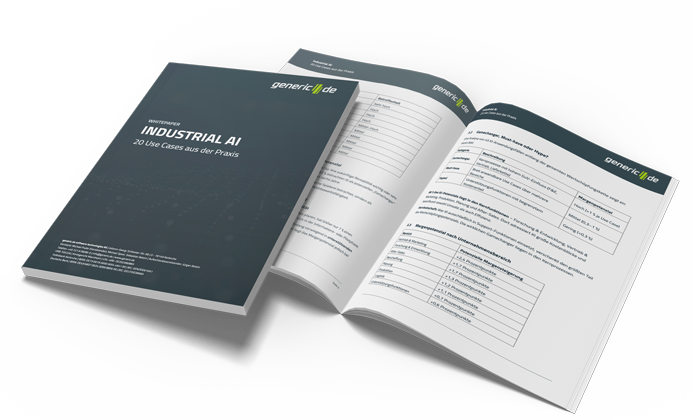
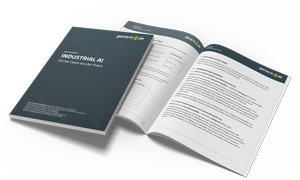
KI in der Industrie ist kein Zukunftsthema mehr, aber wo lohnt sich der Einstieg wirklich? Dieses Whitepaper zeigt 20 anonymisierte Praxisbeispiele, wo KI heute in Kernprozessen messbaren Mehrwert liefert – von Qualitätssicherung über Predictive Maintenance bis zur intelligenten Produktionsplanung.