Moritz Pastow
PROGRAM MANAGER DIGITAL SERVICES & IIOT,
LEWA GMBH
LEWA GMBH
Off-the-shelf software and IoT platforms reach their limits with industrial pumps: numerous product variants, service lives of 20+ years in the field, mixed control systems from different generations, and a complex, evolved IT landscape.
In practice, typical challenges arise:
For manufacturers and operators, the real competitive advantage emerges when operational data is not just collected, but transformed into new services through tailored software: predictive maintenance, remote diagnostics, or data-driven business models.
Thanks to our long-standing partnerships with companies such as LEWA and KSB, we know exactly how the pump industry works – from integration into control systems to predictive maintenance.
Thanks to our AI-driven software development, we deliver features up to 3x faster. You can start testing sooner and get real user feedback earlier – while changes are still cost-effective.
We are convinced that even in the AI era, industrial software must run for decades. That is why our clean code standard applies to AI-generated code as well. For sustainable, not disposable software.
The source code, concepts, designs, and the AI development environment belong to you. You could continue working with your own team tomorrow. We keep clients through results, not lock-ins.
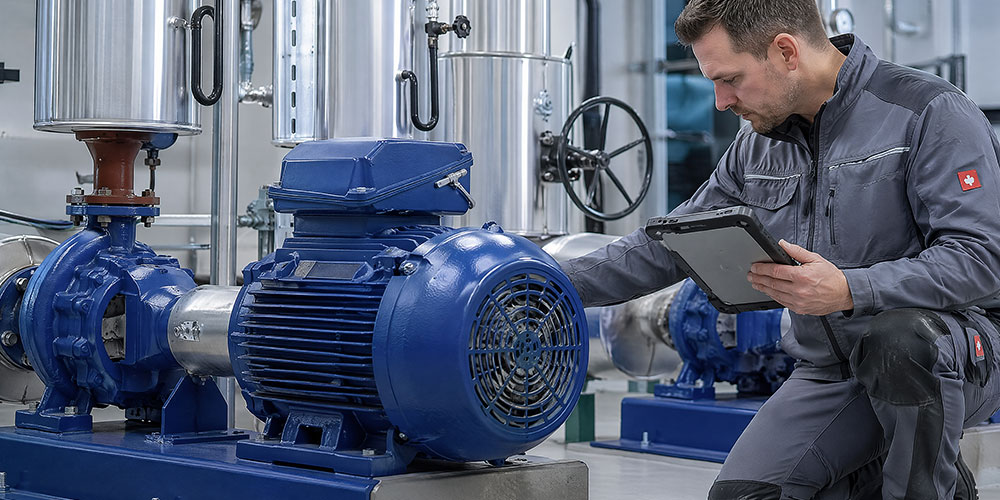
Use operational data from pumps and units to plan maintenance proactively rather than reacting to issues. The result: fewer unplanned outages, lower service costs, and a longer pump service life.

Real-time transparency regarding pump conditions, pressures, vibrations, and downtime – as a basis for faster operational decisions and increased equipment availability.
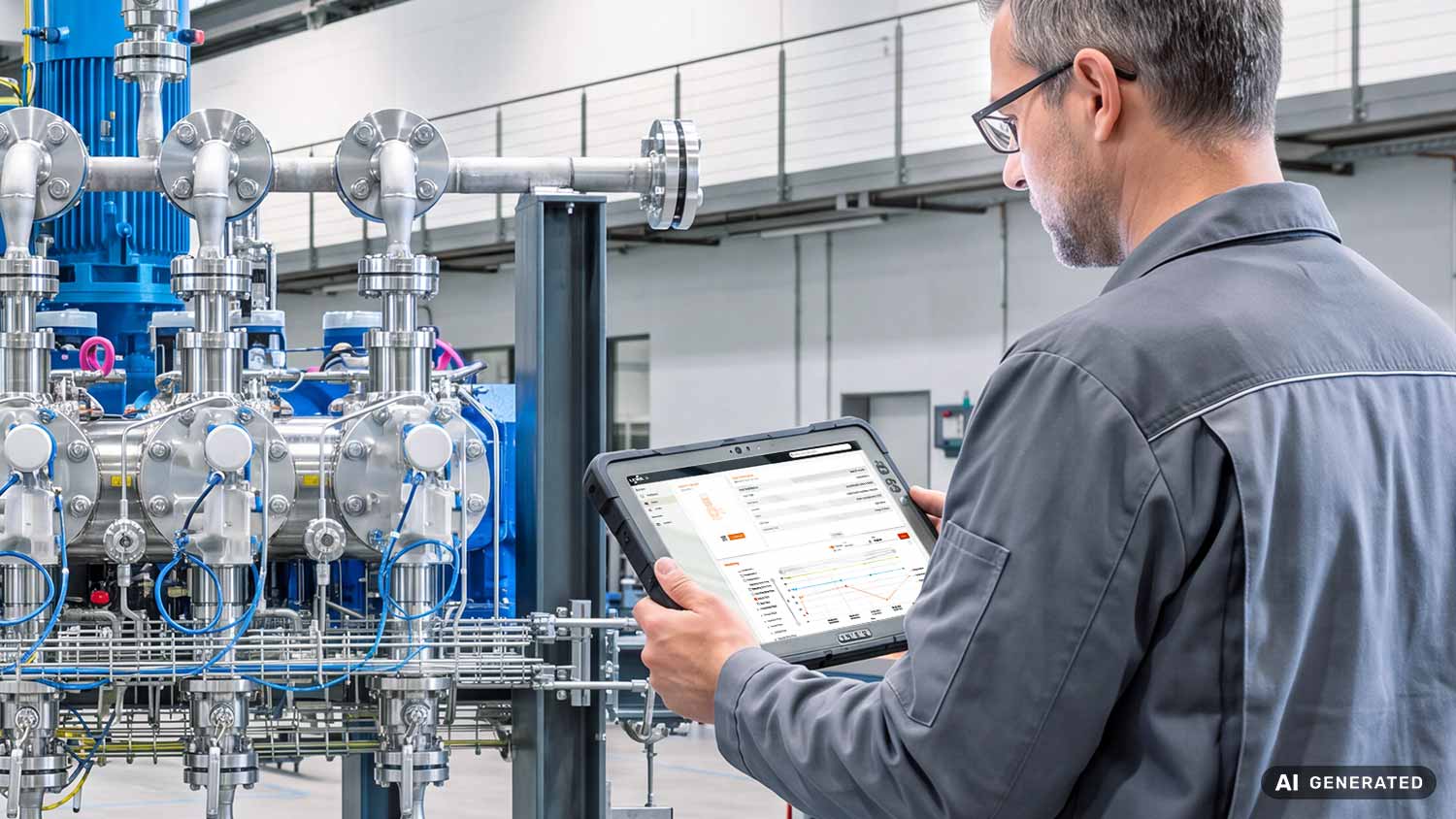
Consolidate operational, sensor, and condition data from pumps and units across sites and fleets – on a scalable IoT platform that serves as a central data hub between the field, control room, and specialized applications.

Link production and quality data from pump manufacturing to systematically identify root causes of errors and sustainably reduce scrap rates – supported by machine learning and intelligent data analysis.

Analyze lead times, bottlenecks, and process deviations based on real production data – across all locations and in real time.
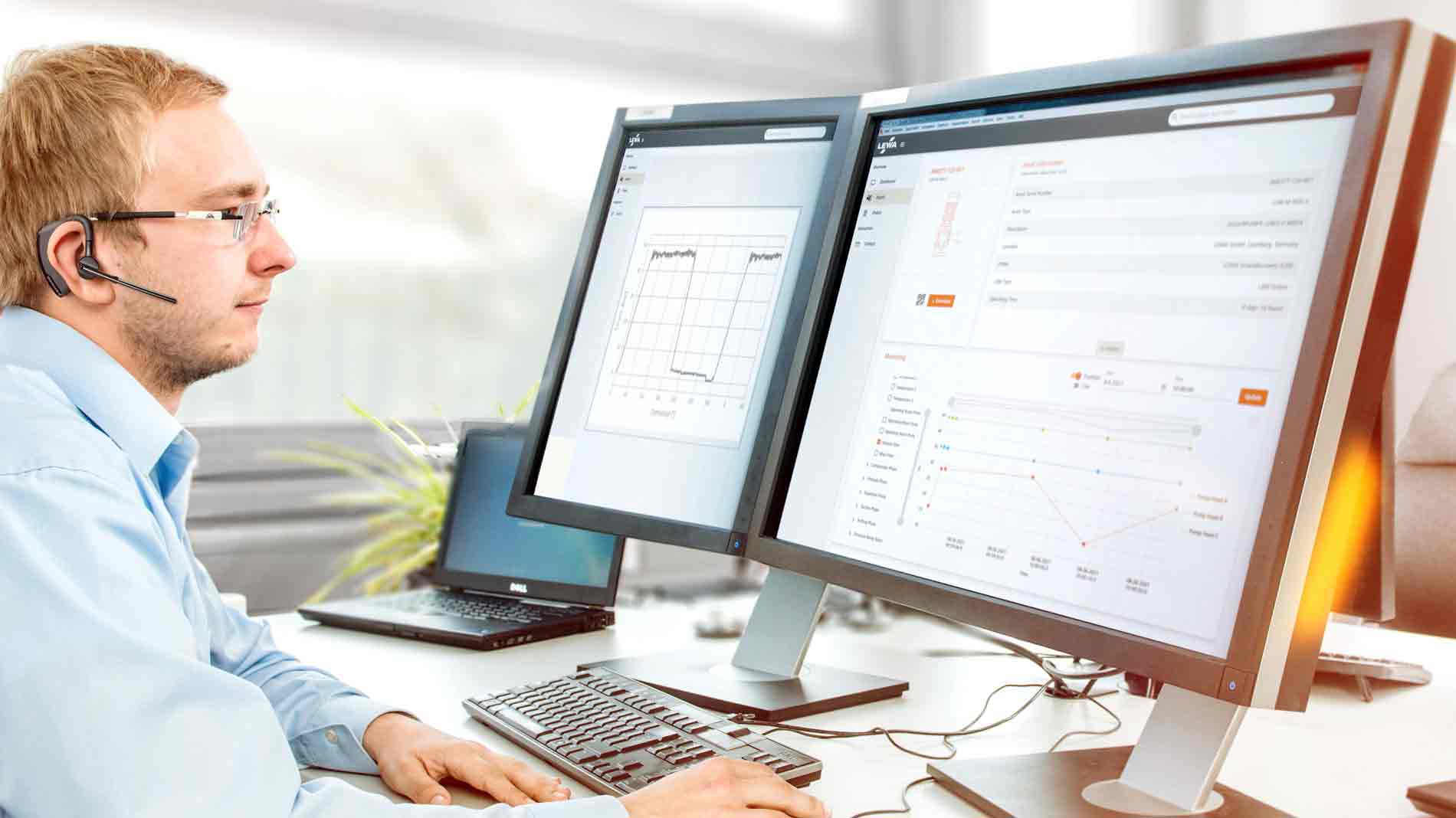
New digital offerings across the pump lifecycle – from service portals with spare parts and maintenance information to remote diagnostics and data-driven operational analysis that foster customer loyalty and generate recurring service revenue.

Together, we analyze your processes and identify your use cases. From there, we develop ideas for software solutions. If you already have a specific idea, we evaluate it for business viability and technical feasibility.
We design your software solution at the intersection of biz, tech, and user requirements. The result is a sophisticated solution concept structured as a machine-readable knowledge graph – perfectly suited for development with AI agents.
Development in Dual Track Agile: In our AI development environment, AI agents handle routine tasks, code, and testing according to clean code standards. Our experts continuously design, verify, and enrich the knowledge graph.
We operate and maintain your software, monitor system performance, and ensure sustainable, secure operation through regular updates and ongoing technological development.
Such a project is worthwhile if you achieve measurable improvements – for example, in availability, service costs, time-to-market for variants, or in the more transparent operation of pumps and systems. Typical effects include fewer unplanned downtimes, more efficient maintenance, or clearer workflows from engineering to after-sales. Often, a clearly defined entry point is sufficient; it is important to establish benefits and key performance indicators early on and to plan the project so that it can be expanded step-by-step as needed.
Common risks include unclear goals, insufficient integration of existing systems (control, ERP, service tools), and overly optimistic assumptions about time or integration. Clearly defining requirements and interfaces, as well as cleanly merging data and having a technically robust concept, significantly reduce risks. Pilot projects or MVPs with a manageable scope help to develop the right thing the right way and then scale it.
It is neither purely an IT nor purely a technical topic: Departments provide pump expertise, processes, and user requirements (e.g., diagnostics, design, service). IT is responsible for integration, security, operations, and further development. Profitable projects emerge where both sides collaborate early on. Defining roles and goals together is more important than mere organizational assignment.
Generally no. Many solutions connect to existing systems and expand them in a targeted way – such as control systems, automation technology, ERP, or service portals. The key is that relevant data and processes (e.g., status, operating history, documentation) are accessible and can be meaningfully linked. Instead of parallel, isolated solutions, a step-by-step expansion of the existing landscape is often recommended so that the solution remains maintainable and integrated in the long term.
Edge and cloud complement each other: Close to the pump or system, data can be prepared, time-critical functions executed, or offline scenarios managed. The cloud is often used for consolidating multiple locations, long-term analysis, integration into enterprise systems, and scaling. What runs where depends on security, latency, operations, and compliance. In practice, a hybrid architecture consisting of edge and cloud components is common – regardless of whether you are using IoT/IIoT or sticking to classic connectivity and software for now.
Small and clearly defined: a manageable use case with recognizable benefits – e.g., a defined pump line, a pilot customer, or a clear service use case. The goal is to gain quick, well-founded insights and experience with technology, organization, and interfaces. Such a start reduces risks and makes the actual value easier to assess. Afterward, the software can be expanded in a targeted manner – to include additional pump types, regions, data sources, or features.
Typical points of contact include Product/Development, Application Engineering or Service, IT, and, if necessary, Maintenance or Quality. What matters is not so much the team size as clear responsibilities and decision-making processes. Pump and process knowledge is just as important as expertise in integration and operation. Regular communication between all parties involved contributes significantly to success.
The duration depends heavily on the scope, the existing system landscape, and the integration effort – ranging from a few months for focused enhancements to longer timeframes for comprehensive platforms or numerous interfaces. Pilot projects provide reliable results early on and help to realistically assess the effort and roadmap.
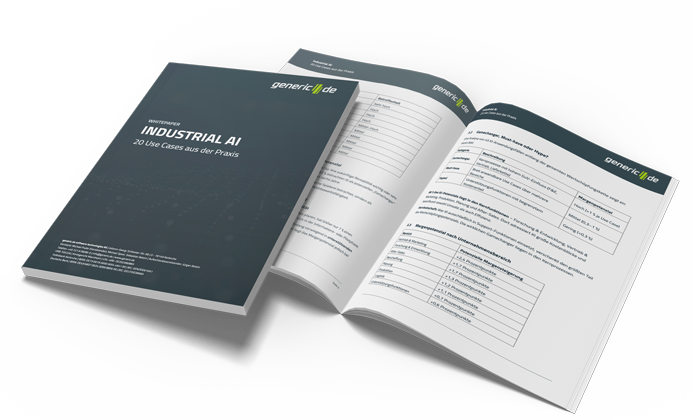
AI in industry is no longer a topic for the future, but where is it really worth getting started? This whitepaper presents 20 anonymized real-world examples of where AI is delivering measurable value in core processes today – from quality assurance and predictive maintenance to intelligent production planning.