Software for the construction industry

We develop custom software for construction companies and suppliers. Our expertise ranges from cloud-based planning and design solutions to structural analysis software, building platforms, and AI-powered data extraction.
Customer since 2005
Customer since 2022
Customer since 2008
Customer since 2022
Customer since 2022
Customer since 2017
Customer since 2019
Customer since 2012
Customer since 2018
Customer since 2012
Customer since 2018
Customer since 2024
Customer since 2005
Customer since 2016
Customer since 2023
Customer since 2005
Customer since 2022
Customer since 2008
Customer since 2022
Customer since 2022
Customer since 2017
Customer since 2019
Customer since 2012
Customer since 2018
Customer since 2012
Customer since 2018
Customer since 2024
Customer since 2005
Customer since 2016
Customer since 2023
Customer since 2005
Customer since 2022
Customer since 2008
Customer since 2022
Customer since 2022
Customer since 2017
Customer since 2019
Customer since 2012
Customer since 2018
Customer since 2012
Customer since 2018
Customer since 2024
Customer since 2005
Customer since 2016
Customer since 2023

The construction industry in transition

Weak productivity growth¹, a shortage of skilled workers, and increasing demands for digital collaboration require new solutions. Cloud software, BIM, and AI create efficiency – yet many companies are not yet prepared for end-to-end digital workflows.

In practice, typical challenges emerge:

  • Fragmented system landscapes: ERP, planning tools, construction site ERP, and manufacturer platforms operate in silos – resulting in media discontinuities and duplicate data entry²
  • Low BIM adoption: Many companies lack the interfaces, data standards, and software infrastructure to use BIM productively
  • Outdated legacy software: Local planning and structural analysis software without centralized versioning – every release results in support overhead and rework
  • Low level of digitalization: Only one in five construction companies is equipped for digital construction³ – even though 86% see potential in cloud and 56% in IoT

Why generic.de is the right software partner for the construction industry

We know your industry from hands-on project experience

Through our long-standing partnerships with com­panies like Schöck, Vollack, and best wood Schneider, we know how the construction industry works – from structural design logic to BIM.

You start testing with real users up to 3x sooner

Thanks to our AI-driven software development, we deliver features up to 3x faster. You can start testing sooner and get real user feed­back earlier – while changes are still cost-effective.

Maintainable and scalable software for years to come

We are convinced that even in the AI era, industrial software must run for decades. That is why our clean code standard applies to AI-generated code as well. For sustainable, not disposable software.

No lock-in – switching is possible at any time

The source code, concepts, designs, and the AI dev­elopment environment belong to you. You could continue working with your own team tomorrow. We keep clients through results, not lock-ins.
Book a discovery call
Continue to the enquiry form.
Nora Legittimo
CHIEF DIGITAL OFFICER (CDO),
SCHÖCK BAUTEILE GMBH
I find a beta phase with absolutely no bugs or other issues in the software to be truly unusual. But given our industry’s extreme focus on security, it is, of course, a fantastic thing.
Alexander Strobl
DIRECTOR DIGITAL TRANSFORMATION IT
J. WAGNER GMBH
Infrastructure, backend, frontend, Azure services, as well as conceptual consulting and support – generic.de has this full-stack approach. That’s what convinced me once again.
Manuel Stuhlinger
APPLICATION ENGINEERING & PRODUCT DEVELOPMENT
BEST WOOD SCHNEIDER® GMBH
For me as a client, Clean Code simply offers the security of independence. I don't want to be stuck in 10 years with a piece of code that no one understands anymore, forcing us to start all over again.
Julian Geiger
Agile Team Lead Digital Solutions
Uhlmann Pac-Systeme GmbH & Co. KG
We were impressed by how quickly the generic.de team got up to speed and the motivation they brought to such a complex subject. The team works very independently and, just like us, places the highest value on quality. That’s why the software and our standards are a perfect match!
Tobias Vock
Manager Solutions
‍
‍Saatmann GmbH
The qualified software audit from generic.de was a huge help in our further process. The results took a lot of pressure off us internally. We finally had neutral, external confirmation that we were on the right track and knew exactly which areas still needed fine-tuning.
Moritz Pastow
PROGRAM MANAGER DIGITAL SERVICES & IIOT,
LEWA GMBH
Because everyone is interconnected and shares the same project expertise, it just works. I save time and money that would otherwise be spent on explanations, knowledge transfer, management, or coordination.

How we can support you in the construction industry

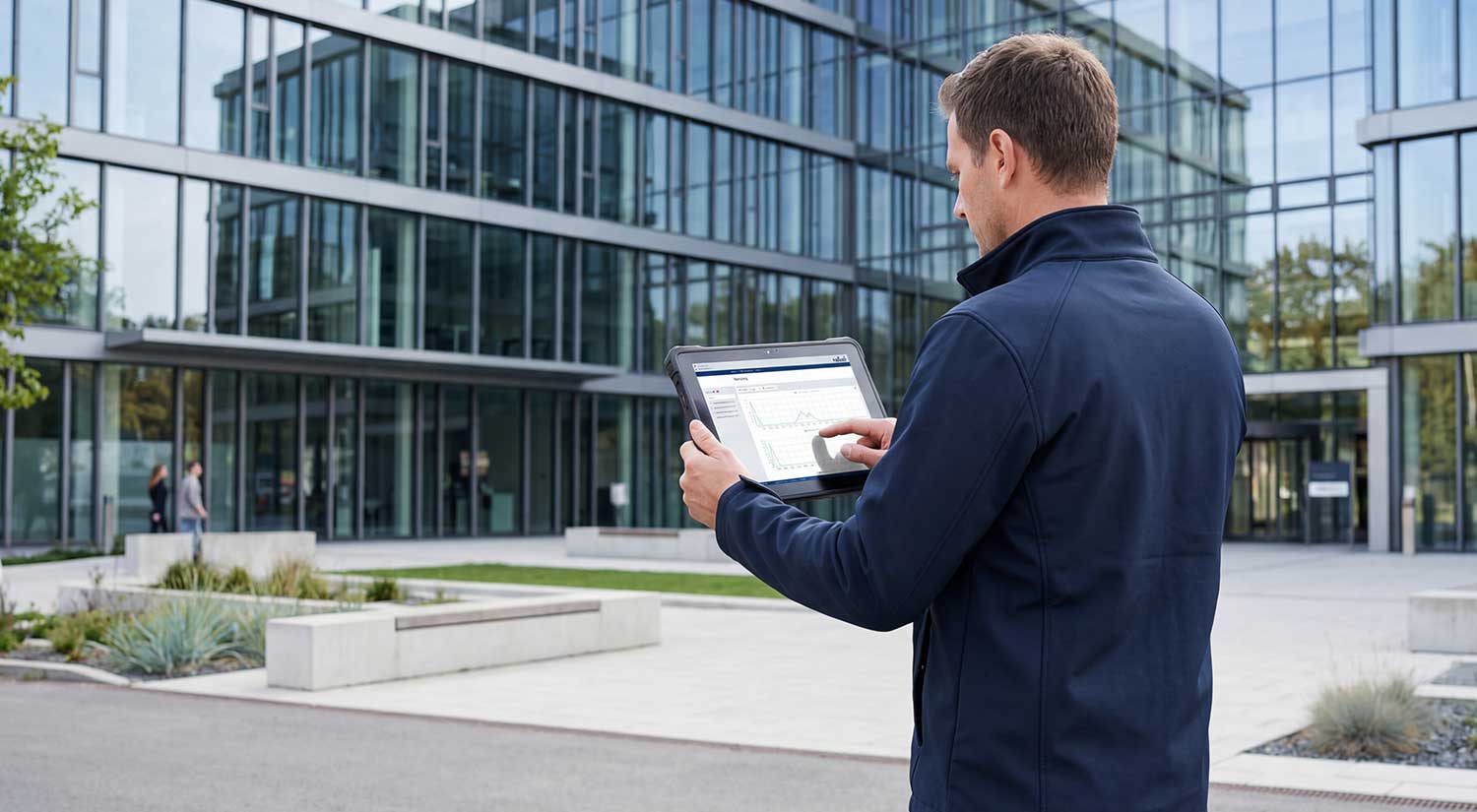
Person holding a tablet displaying industrial monitoring software with charts and asset information.

Cloud-based planning and design software

Make construction products digitally plannable with integrated calculation, modular architecture, and centralized release management. AI integrations allow existing cloud applications to be intelligently expanded and agentically controlled, for example, for calculation suggestions or plausibility checks.
A man with a tablet operating a machine in a modern factory hall.

Software modernization: From desktop to web

Replace legacy Windows applications with web-based interfaces – platform-independent, with global versioning and no manual update effort. Through AI integrations (e.g., via MCP), specialized applications can be retrofitted with intelligent features without touching the core logic.
Automated packaging machine placing boxes on a conveyor belt in a factory.

IoT and digital construction equipment management

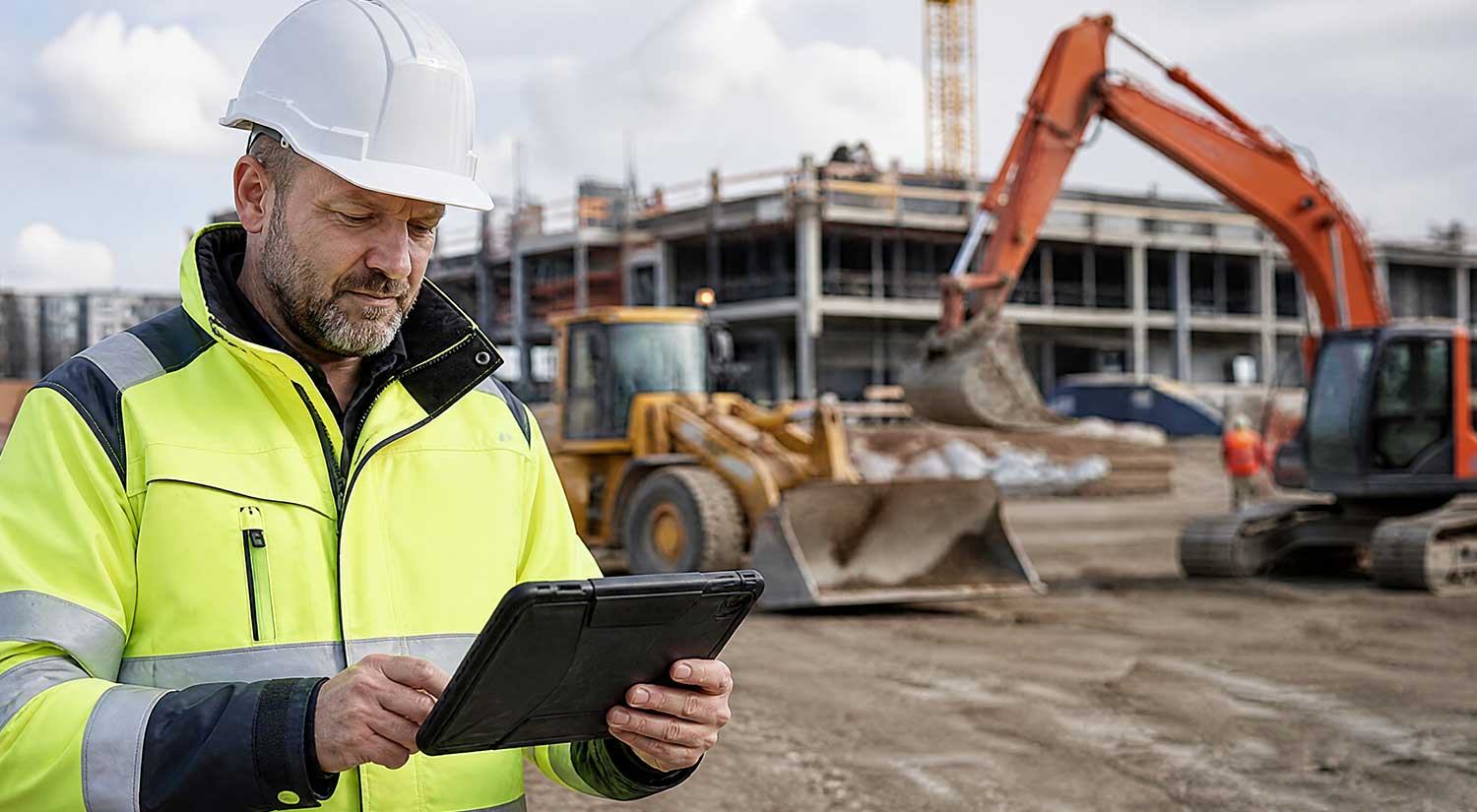
Digitally inventory, locate, and maintain the operational readiness of construction equipment and vehicle fleets. Using sensors, telematics, and IoT platforms, you can reduce search times, downtime, and inefficient utilization – from individual construction sites to fleet management.
Man with glasses looking at large screens displaying charts and data visualizations.

AI-powered recognition and data extraction

Automatically identify and classify materials, documents, or components using image recognition, NLP, or machine learning. Where manual assignment is too slow, AI models create structured data from unstructured sources.
Man with glasses looking at large screens displaying charts and data visualizations.

Building platforms and digital facility management

Digitally mapping buildings throughout their lifecycle – from planning and operation to management. We develop platforms that centrally bundle building data and integrate processes such as maintenance, energy management, or tenant administration.

Man with glasses looking at large screens displaying charts and data visualizations.

Integration of fragmented system landscapes

Transforming ERPs, planning tools, BIM models, and manufacturer platforms into a seamless architecture. We connect your systems using an API-first approach and open standards. For companies that are not yet BIM-ready, we first create the necessary interfaces as a foundation.

Our REFERENCES

Selected case studies

Schöck Bauteile GmbH

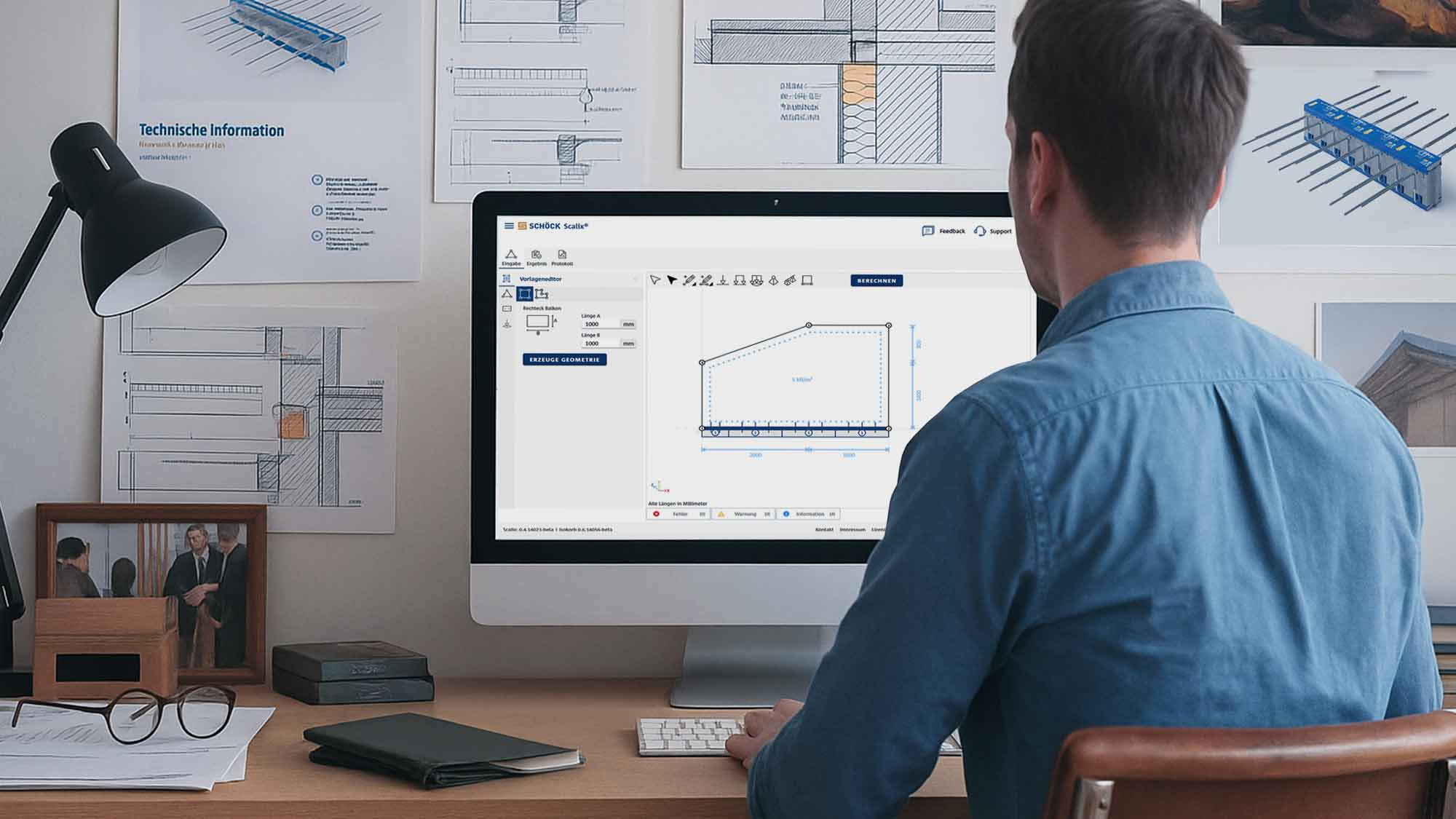
Development of web-based planning and design software for structural components

How we worked with Schöck to design the Scalix® planning and design software and develop it as a modular cloud application.
  • Complete solution with integrated free-form calculation
  • Modular architecture enables scaling and extensions
  • Flexible versioning allows project editing in any release version
best wood SCHNEIDER® GmbH

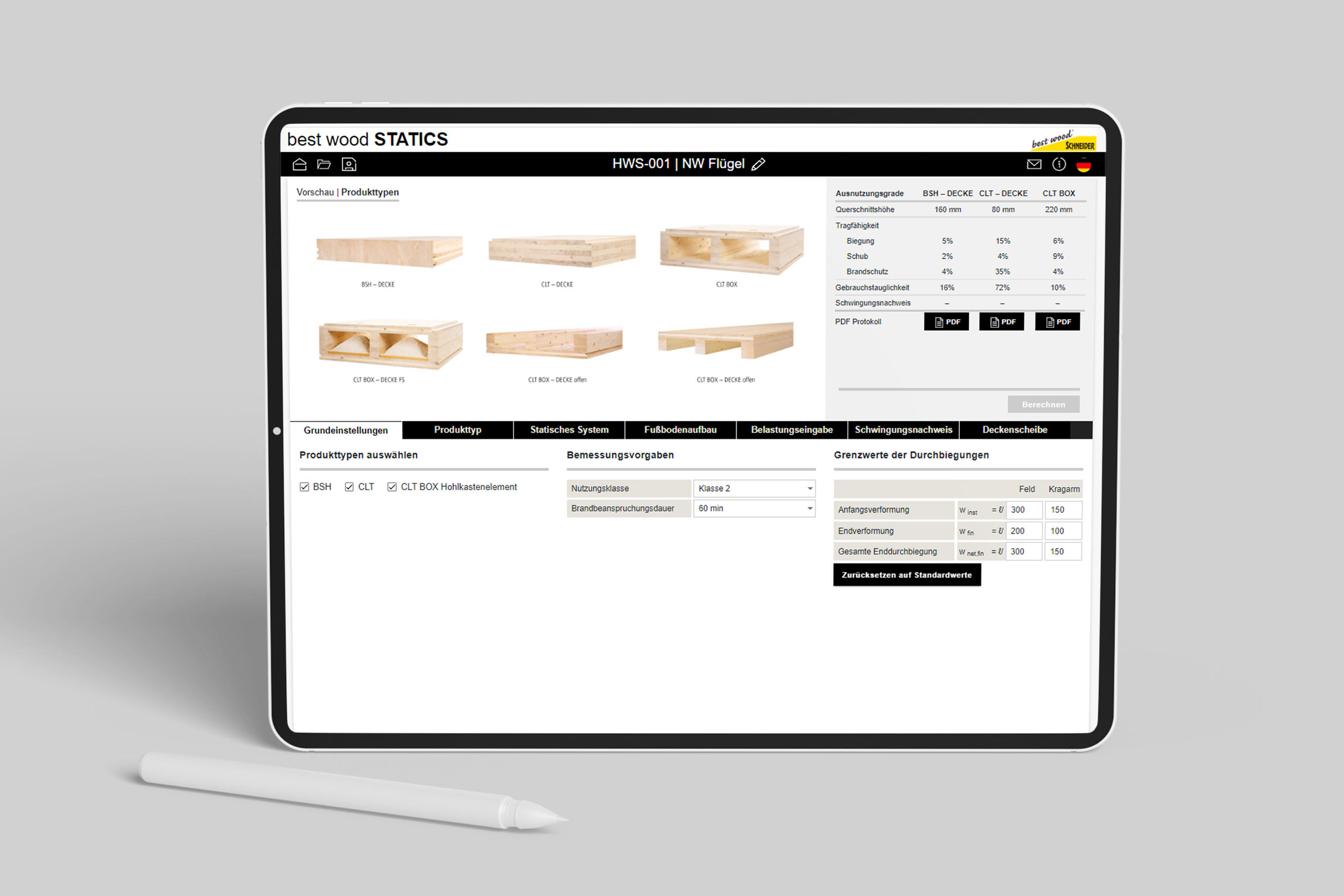
Modernization of desktop structural analysis software into a web app with a modern user interface

How we modernized the structural analysis software best wood STATICS from an aging desktop application into an intuitive web app.  
  • Increased usability through global versioning and a more intuitive user interface
  • Time savings through reduced launch and consulting efforts
  • More flexible usage through browser-based development
J. Wagner GmbH

Always the right spray setup thanks to our smart feature

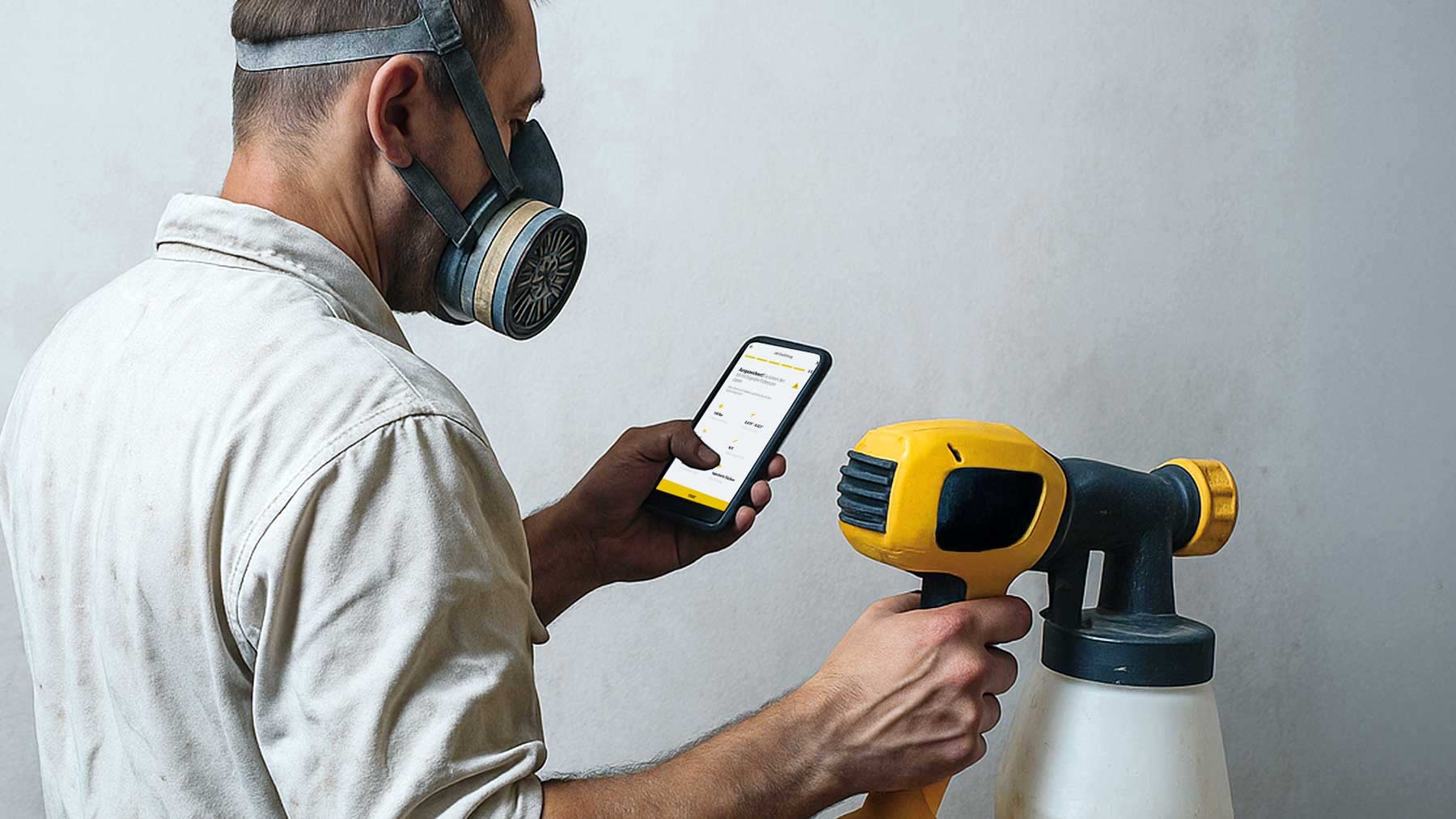
How we developed the core feature of the Spraymanager app for J. Wagner GmbH – intelligent material recognition powered by data science and machine learning.
  • Intelligent material recognition currently unique in this form and market segment
  • Flexible API enables high scalability and future use cases
  • Custom-developed web crawler fully automates the scanning of manufacturer websites and PDFs
tco-calculator

Total cost analysis for your software project

Unlock our TCO calculator now for free and put your software project to the acid test.

Typical challenges in software­­projects and how we solve them

Challenges & Solutions

Unclear project scoping: Scope, timeline, and budget are difficult to estimate before the project starts.
Upfront concept development: Assess risks and develop a reliable cost estimate – before development begins.
Lack of prioritization: Too many features, too little focus – in the end, many things are started, but nothing is truly finished.
Dual Track Agile: Parallelizing concept and development – continuously prioritizing features based on business value.
Increasing compliance requirements: CRA, NIS2, ISO 27001 – regulatory pressure is growing, and retrofitting security is expensive.
Security by Design: Security and compliance requirements are integrated into the development process from day one.

How we develop your custom construction software

DESIGN
Process Analysis & Ideation
1-2 weeks

Together, we analyze your processes and identify your use cases. From there, we develop ideas for software solutions. If you already have a specific idea, we evaluate it for business viability and technical feasibility.

DISCOVER
Concept Development & Knowledge Graph
4-8 weeks

We design your software solution at the intersection of biz, tech, and user requirements. The result is a sophisticated solution concept structured as a machine-readable knowledge graph – perfectly suited for development with AI agents.
‍

DEVELOP
AI-driven Software Development
6-X months

Development in Dual Track Agile: In our AI development environment, AI agents handle routine tasks, code, and testing according to clean code standards. Our experts continuously design, verify, and enrich the knowledge graph.

DEVOPS
Support & Maintenance
continuously

We operate and maintain your software, monitor system performance, and ensure sustainable, secure operation through regular updates and ongoing technological development.

Your benefits

AI-driven development makes coding up to 3x faster

AI-driven software development accelerates implementation – standards and clean code ensure that speed does not come at the expense of maintainability.

Over 25 years of enterprise experience

For over 25 years, we have been developing custom software for the industrial sector, combining deep industry expertise with a collaborative, peer-to-peer approach.

No hidden Lock-In

The source code, concepts, designs, and AI development environment belong to you – they are readable and can be further developed with other partners at any time.

We protect your investment with Clean Code

Whether using AI or done by hand – Clean Code is our standard. This ensures that your software remains flexible and expandable even years down the road.

Software development in Dual Track Agile

Design and development proceed in parallel – only what has been validated and generates added value is developed.

Compliance-driven development

ISO-compliant processes and CRA readiness are built in – compliance from the start, not as a costly add-on.

User-centric design from the start

Prototypes and usability tests before any code is written – for software that users embrace and that delivers a return on investment.

Experts in every project role

Our employees are experts in their fields, receive ongoing training, and have a generous annual training budget.

API-first

Clearly define interfaces so that ERP, MES, and machines can work together seamlessly and scalably.

Your gateway to professional construction software: just a phone call away.

If you would like to know which data we process and how long we store it, you can find further information in our Privacy statement.
Your data is transmitted in encrypted form
Thank you so much! We have received your contact request!
Oh no! Something went wrong. Please try again!
Jörg Lenz
Key Account Manager
FAQs

Frequently asked questions about software projects in the construction industry

Why custom software – isn't standard construction software enough?

Digital ecosystems in the construction industry generally consist of numerous specialized systems – no single software category can fully cover all use cases. When data from ERP, inventory, localization, and construction site management needs to be consolidated, custom software is often the only option to avoid media discontinuities. Tailor-made software is particularly advantageous when mapping individual products or processes.

Where is the most sensible place to start digitalization in the construction industry?

A typical approach involves four essential steps: (1) Developing a target vision, (2) Inventory assessment (equipment, systems, data silos), (3) Developing a system architecture, and (4) Identifying potential obstacles (e.g., roll-out, hardware retrofitting, regulations). In construction equipment management, digitalization often begins with inventory tracking (Stage 1) before further steps like IoT localization and connectivity follow.

What are the concrete benefits of IoT on the construction site?

Localization: less loss and theft, no more long searches for equipment. Operational readiness: telematics, predictive maintenance, and optimized workflows. Empirical data shows, for example, up to 20% fewer miles driven and up to 40% fuel savings per vehicle. Connectivity: device-to-device communication, remote control, and robotics support.

How quickly can we get to an initial version?

Through methods like Dual Track Agile and rapid prototyping, early validation points are standard. Interactive showcases and MVPs can often be presented after just a few weeks, depending on the project scope.

Do we have to replace our desktop app entirely?

Whether a complete rebuild is necessary depends on factors such as technical dependencies or the desired level of innovation. A step-by-step, customized approach is often more sensible than a "big bang" transition.

Can calculation engines be integrated into existing structural analysis software?

Yes – by intentionally separating the backend and frontend, new features can often be integrated into existing software environments, allowing structural engineers to continue working as usual.

How long does it take to implement a software project like this?

The duration depends heavily on the scope, the existing system landscape, and the integration effort – ranging from a few months for focused enhancements to longer timelines for comprehensive platforms or numerous interfaces. Pilot projects provide reliable results early on and help to realistically assess effort and roadmaps.
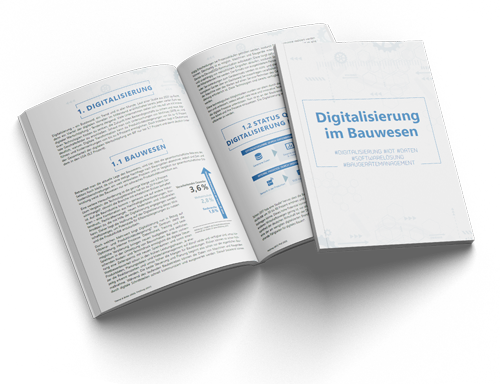
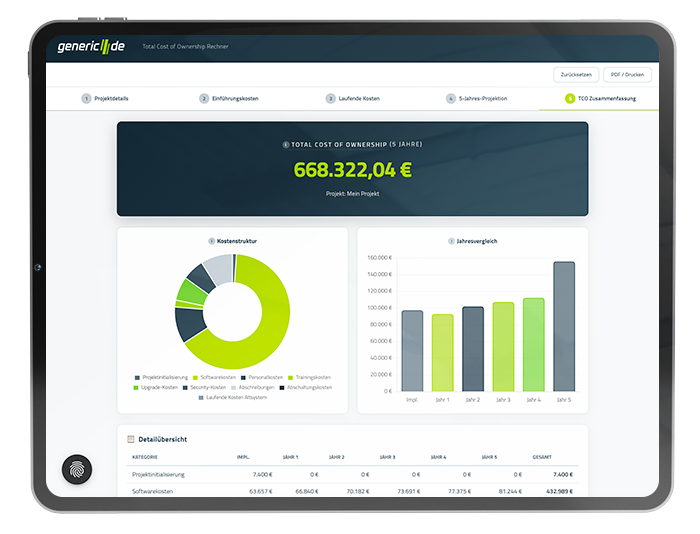
Abbildung unseres TCO-Calculators zur Software-Kosten-Analyse auf einem Tablet

Unlock TCO calculator now

Our TCO calculator helps you analyze the total cost of your software project – whether it's custom development, an on-premise solution, or SaaS.

If you would like to know which data we process and how long we store it, you can find further information in our privacy policy.
Your data will be transmitted securely
Thank you! We have received your contact request!
Oh no! Something went wrong. Please try again!

Expert study: Digitalization in the construction industry

Construction workers spend about 70% of their time searching, transporting, and preparing rather than doing the actual work – digital construction equipment management with IoT can address exactly this. Based on 12 interviews and an analysis of over 45 software providers, this expert study shows how construction companies can become more productive step-by-step, from inventory management to full connectivity.
If you would like to know what data we process and how long we store it, you can find further information in our privacy policy.
Your data will be transmitted in encrypted form
Thank you! We have received your contact request!
Oh no! Something went wrong. Please try again!
STUDY

Digitalization in construction