Moritz Pastow
PROGRAM MANAGER DIGITAL SERVICES & IIOT,
LEWA GMBH
LEWA GMBH
The engineering industry is under pressure: stagnant production output, rising digital expectations, regulation (CRA, NIS2), and a shortage of skilled workers demand new solutions. Digital service platforms, predictive maintenance, and industrial AI generate recurring revenue, secure institutional knowledge, and accelerate digital transformation.
In practice, typical challenges emerge:
As a VDMA member and through our many years of collaboration with companies like LEWA, TRUMPF, and Uhlmann, we know how mechanical engineering works – from HMI to IIoT.
Thanks to our AI-driven software development, we deliver features up to 3x faster. You can start testing sooner and get real user feedback earlier – while changes are still cost-effective.
We are convinced that even in the AI era, industrial software must run for decades. That is why our clean code standard applies to AI-generated code as well. For sustainable, not disposable software.
The source code, concepts, designs, and the AI development environment belong to you. You could continue working with your own team tomorrow. We keep clients through results, not lock-ins.
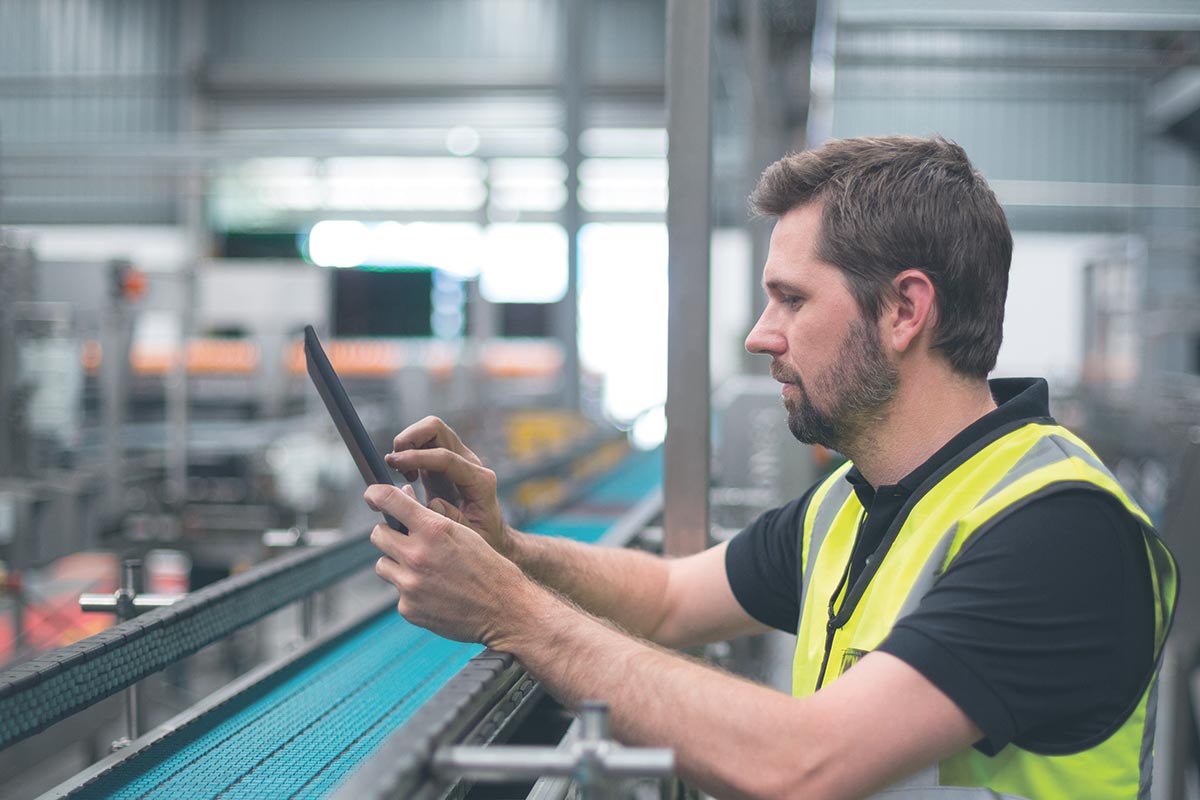
Integrating heterogeneous machine fleets – with varying years of manufacture, manufacturers, and control systems – into a unified data landscape. Using OPC UA, MQTT, and edge technology, we lay the foundation for all further steps in digitalization: from condition monitoring to the digital twin.

Leverage operational data from sensors and control systems to predict maintenance needs and prevent downtime. Across all industries, unplanned downtime can be reduced by 30 to 50% – using ML models, time-series analysis, and intelligent dashboards.
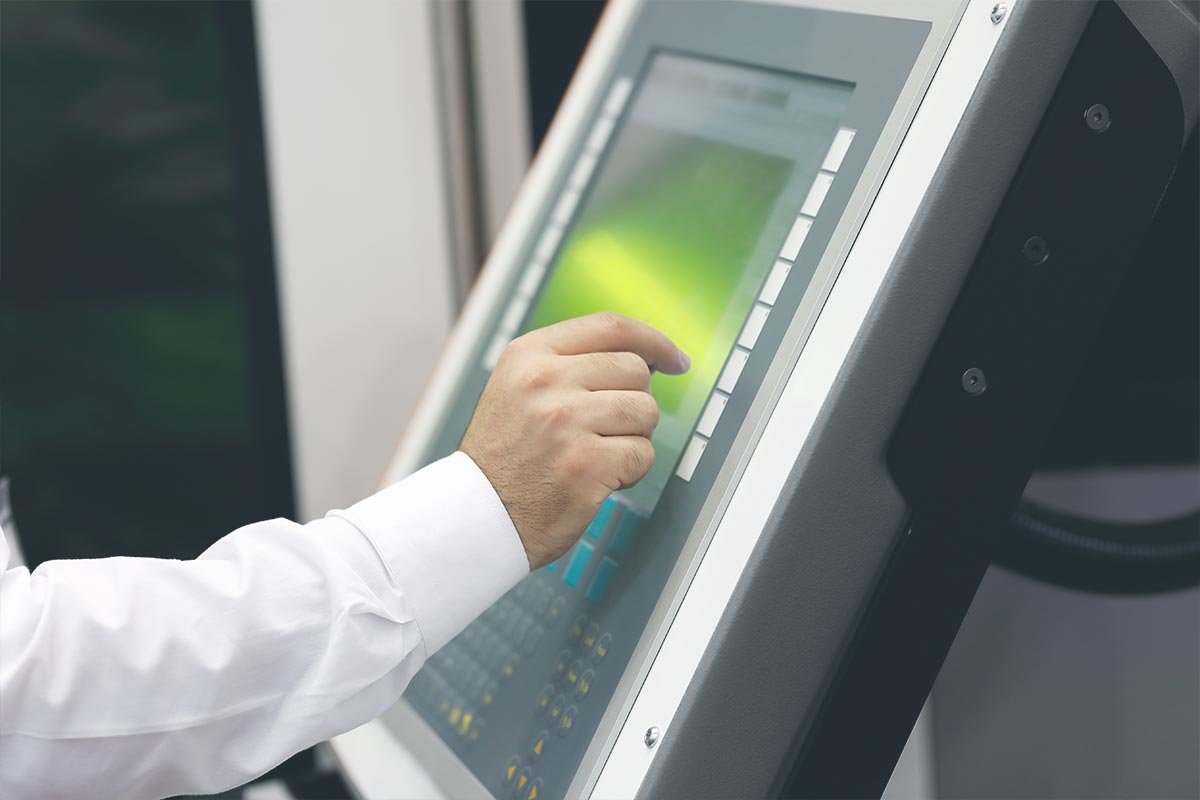
Replace outdated HMI systems with modern, web-based interfaces – responsive, touch-optimized, and fully focused on Industrial UX. The result: shorter training times and fewer operating errors. Plus: configurable HMI frameworks that allow machine builders to assemble their own user interfaces without IT expertise.

Self-service portals featuring spare parts ordering, documentation, ticketing, and remote support – seamlessly integrated with ERP and CRM. The foundation for recurring revenue and stronger customer loyalty in the age of servitization.

Camera-based inline inspection using deep learning replaces or supplements manual visual inspection. Computer vision and intelligent material recognition deliver consistent results in less than one second per component.

Starting in 2027, the CE marking will require security-by-design. We integrate SBOM generation, vulnerability management, and secure development processes directly into the delivery pipeline – no costly rework, just compliance from the start.

Together, we analyze your processes and identify your use cases. From there, we develop ideas for software solutions. If you already have a specific idea, we evaluate it for business viability and technical feasibility.
We design your software solution at the intersection of biz, tech, and user requirements. The result is a sophisticated solution concept structured as a machine-readable knowledge graph – perfectly suited for development with AI agents.
Development in Dual Track Agile: In our AI development environment, AI agents handle routine tasks, code, and testing according to clean code standards. Our experts continuously design, verify, and enrich the knowledge graph.
We operate and maintain your software, monitor system performance, and ensure sustainable, secure operation through regular updates and ongoing technological development.
Such a project is worthwhile if you want to achieve measurable improvements – for example, in machine availability, service costs, time-to-market for new variants, or in developing data-driven revenue models.
Typical benefits include fewer unplanned downtimes, more efficient maintenance, faster commissioning, or a digital service offering that strengthens customer loyalty and recurring revenue. Often, a clearly defined starting point – such as a pilot for a specific machine series or a concrete service use case – is sufficient. It’s important to define benefits and key performance indicators early on.
Generally, no. Many solutions connect to existing systems and extend them in a targeted way – such as control systems, SCADA, ERP, MES, or existing service tools. Older machines and controllers can also be integrated using open standards like OPC UA and MQTT. Instead of creating parallel, isolated solutions, we recommend a step-by-step expansion of your existing landscape to ensure the solution remains maintainable and integrated in the long term. The key is a clean architecture that bridges the gap between old and new.
An increasingly central one. Starting in December 2027, the Cyber Resilience Act will require “security by design” as a prerequisite for CE marking – including mandatory SBOMs and vulnerability management for at least 5 years. NIS2 has been in effect in Germany since the end of 2025 and affects approximately 29,500 companies. The new EU Machinery Regulation explicitly makes security a safety requirement starting in 2027. Anyone developing or modernizing software now should plan for these requirements from the very beginning. We integrate compliance requirements directly into our development processes – no costly rework.
Software projects in mechanical engineering are not purely an IT matter. Typical stakeholders include product development, service/after-sales, application engineering, production, and, of course, IT. Profitable projects emerge where domain expertise and IT knowledge come together early on. In our experience, clear roles and short decision-making paths are more important than mere organizational assignment. Our “Product Trio” approach (Business + UX + Technology) ensures that all perspectives are integrated from the very beginning.
Servitization describes the shift from simply selling products to data-driven business models: Equipment-as-a-Service, pay-per-use, remote monitoring, and digital after-sales platforms. Off-the-shelf software often reaches its limits here because the business models must be closely integrated with machine logic, customer processes, and the existing IT landscape. Custom software can bridge exactly this gap – between the machine, the data, and the new business model.
Small and clearly defined: a manageable use case with recognizable benefits – e.g., defined processes, a pilot customer, or a clear service use case. The goal is to quickly gain sound insights and experience with technology, organization, and interfaces. Starting this way reduces risks and makes it easier to assess the actual benefits. Afterward, the software can be expanded in a targeted manner – to include additional processes, regions, data sources, or functions.
Typically, this includes contacts from product/development, application engineering or service, IT, and – if necessary – maintenance or quality assurance. What matters most is not so much the team size as clear responsibilities and decision-making processes. Domain and process knowledge is just as important as expertise in integration and operations. Regular communication among all stakeholders contributes significantly to the project’s success.
The duration depends heavily on the scope, the existing system landscape, and the integration effort – ranging from a few months for focused enhancements to longer timelines for comprehensive platforms or numerous interfaces. Pilot projects provide reliable results early on and help to realistically assess the effort required and define the roadmap.
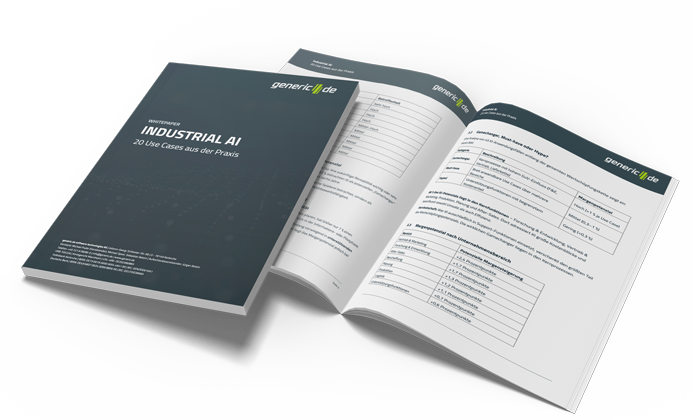
AI in industry is no longer a topic for the future, but where is it really worth getting started? This whitepaper presents 20 anonymized real-world examples of where AI is delivering measurable value in core processes today – from quality assurance and predictive maintenance to intelligent production planning.