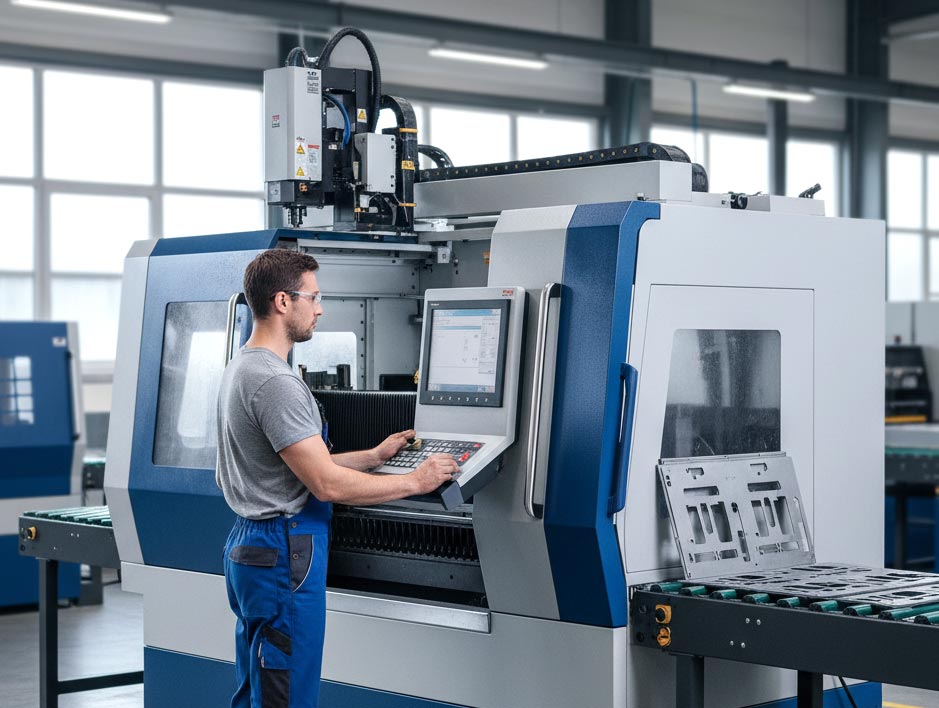
Software for machine tools

We develop custom software for machine tool manufacturers – ranging from modular HMI frameworks and service management systems to the replacement of legacy machine software.
Customer since 2005
Customer since 2022
Customer since 2008
Customer since 2022
Customer since 2022
Customer since 2017
Customer since 2019
Customer since 2012
Customer since 2018
Customer since 2012
Customer since 2018
Customer since 2024
Customer since 2005
Customer since 2016
Customer since 2023
Customer since 2005
Customer since 2022
Customer since 2008
Customer since 2022
Customer since 2022
Customer since 2017
Customer since 2019
Customer since 2012
Customer since 2018
Customer since 2012
Customer since 2018
Customer since 2024
Customer since 2005
Customer since 2016
Customer since 2023
Customer since 2005
Customer since 2022
Customer since 2008
Customer since 2022
Customer since 2022
Customer since 2017
Customer since 2019
Customer since 2012
Customer since 2018
Customer since 2012
Customer since 2018
Customer since 2024
Customer since 2005
Customer since 2016
Customer since 2023

Machine tool manufacturing – an industry in transition

Machine tools are becoming increasingly powerful, but competition is increasingly decided by software: by the user interface, serviceability, and how quickly a new machine variant can be delivered. Standard platforms reach their limits here because they cannot accommodate the variety, the proximity to control systems, and the lifecycles of this industry.

In practice, typical challenges emerge:

  • Variety instead of mass production: machine series, options, custom machines, and different display sizes must all be supported by a single software base.
  • Legacy machine software: operating software in C++, MFC, VB6, or WPF, expanded over years, tightly coupled to the control system, and barely documented.
  • Long lifecycles: 15 to 20 years in the field, often spanning multiple generations of control and operating systems.
  • Service as a revenue pillar: global technical support, spare parts, and remote maintenance—organizationally complex and often fragmented across isolated solutions.
  • Usability as a productivity factor: changing operators and a shortage of skilled workers make setup and training times a significant cost factor.

For machine tool manufacturers, the real competitive advantage arises when software does more than just operate the machine—it creates shorter setup times, predictable service, and new digital revenue streams.

Why generic.de is the right software partner for machine tool manufacturing

We know your industry from hands-on project experience

Through our long-standing partnerships with com­panies like TRUMPF and Klingelnberg, we have gained a deep under­standing of the machine tool industry – from HMI development to service management.

You start testing with real users up to 3x sooner

Thanks to our AI-driven software development, we deliver features up to 3x faster. You can start testing sooner and get real user feed­back earlier – while changes are still cost-effective.

Maintainable and scalable software for years to come

We are convinced that even in the AI era, industrial software must run for decades. That is why our clean code standard applies to AI-generated code as well. For sustainable, not disposable software.

No lock-in – switching is possible at any time

The source code, concepts, designs, and the AI dev­elopment environment belong to you. You could continue working with your own team tomorrow. We keep clients through results, not lock-ins.

We are delighted with the great success of the project and our excellent, long-standing partnership with generic.de AG. We view Clean Code Development as a key milestone in software evolution—one that allows us to further increase development efficiency, master even greater complexity, and achieve a higher level of internal software quality that ensures future-proof results.
Head of Technology and Innovation (former)
KLINGELNBERG GmbH
Moritz Pastow
PROGRAM MANAGER DIGITAL SERVICES & IIOT,
LEWA GMBH
Our pumps dose and transport critical and expensive fluids. Over the past few years, we have built up a great deal of monitoring expertise for our pumps. With Smart Monitoring, we can finally make this available to our customers. generic.de was the perfect partner for this task.
Nora Legittimo
CHIEF DIGITAL OFFICER (CDO),
SCHÖCK BAUTEILE GMBH
I find a beta phase with absolutely no bugs or other issues in the software to be quite unusual. But given our industry's extreme focus on security, that is obviously a fantastic thing.
Julian Geiger
Agile Team Lead Digital Solutions
Uhlmann Pac-Systeme GmbH & Co. KG
We were impressed by how quickly the generic.de team got up to speed and the motivation they brought to such a complex subject. The team works very independently and, just like us, places the highest value on quality. It means our software and our standards are a perfect match!
Alexander Strobl
DIRECTOR DIGITAL TRANSFORMATION IT
J. WAGNER GMBH
At the beginning, there was a lot of mocking and prototyping involved. You have to find a service provider willing to jump into that with you. generic.de simply has the right mindset for challenges like these—the perfect hands-on approach.
Tobias Vock
Manager Solutions
Saatmann GmbH
The qualified software audit from generic.de was a huge help in our ongoing process. The results took a lot of pressure off us internally. We finally had neutral, external confirmation that we were on the right track and knew exactly which areas we still needed to fine-tune.
Manuel Stuhlinger
APPLICATION ENGINEERING & PRODUCT DEVELOPMENT
BEST WOOD SCHNEIDER® GMBH
For me as a client, Clean Code simply provides the security of independence. I don't want to be stuck in 10 years with a piece of code that no one understands anymore, forcing us to start all over again.

How we can support the machine tool industry

A man with a tablet operating a machine in a modern factory hall.

HMI development and machine operating software

One user interface for an entire machine series instead of a separate solution for every machine type: We design and develop modular HMI frameworks that adapt to different display sizes, equipment variants, and user roles. Setup, programming, diagnostics, and maintenance each get the view they need – consistent across the entire product line. The result: shorter training times, fewer operating errors, and a unified brand experience at every machine.

A person holding a tablet displaying industrial monitoring software with charts and asset information.

Service management systems for global customer support

From the initial call to the final report in one system: We develop service management solutions that coordinate technical customer support throughout the entire machine lifecycle – including 24/7 ticketing, deployment planning, spare parts procurement, and integration with SAP, CRM, DMS, Active Directory, and telephony. The result: predictable service instead of reactive operations – and reliable data for service quality and after-sales revenue.

Automated packaging machine placing boxes on a conveyor belt in a factory.

Engineering and configuration software for machine variants

High numbers of variants can no longer be documented manually. We develop configurators that generate the exact CAD model and dimension document from a product configuration just in time, parallelize calculation procedures, and digitize processes in application engineering – globally deployable and integrated into the existing system landscape. The result: quotes and engineering documents in minutes instead of days, with no media discontinuity between sales, application engineering, and design.

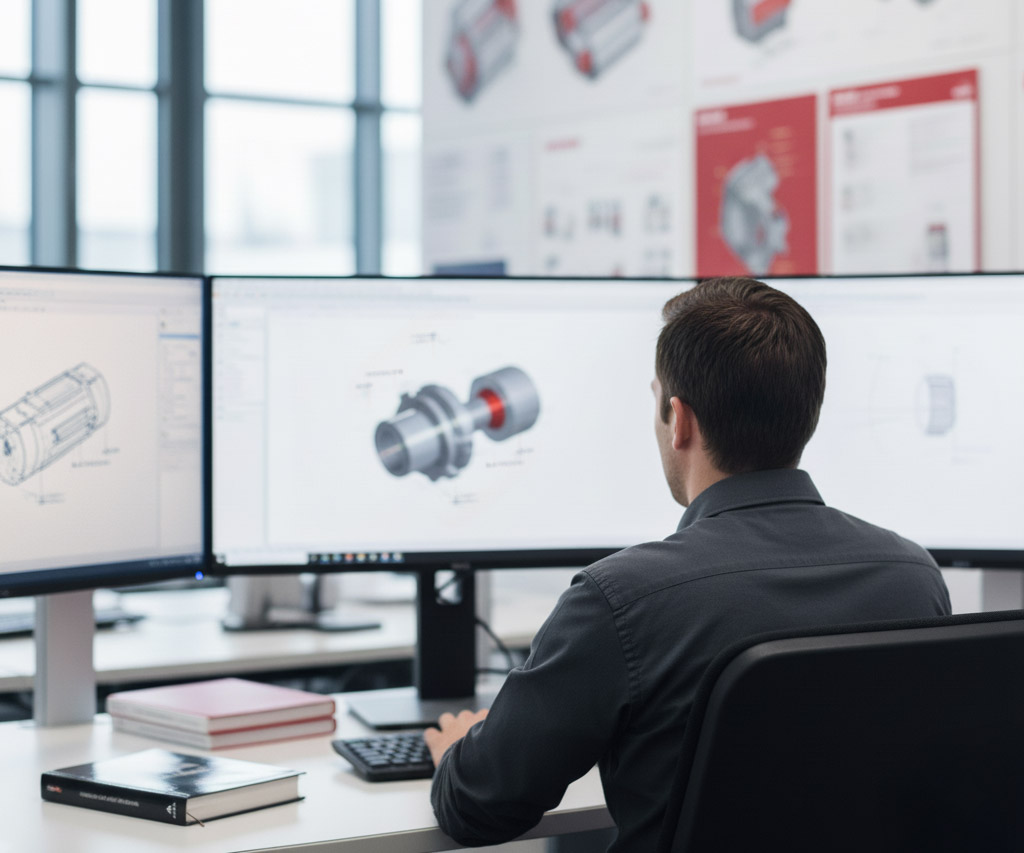
A man with glasses looking at large screens displaying charts and data visualizations.

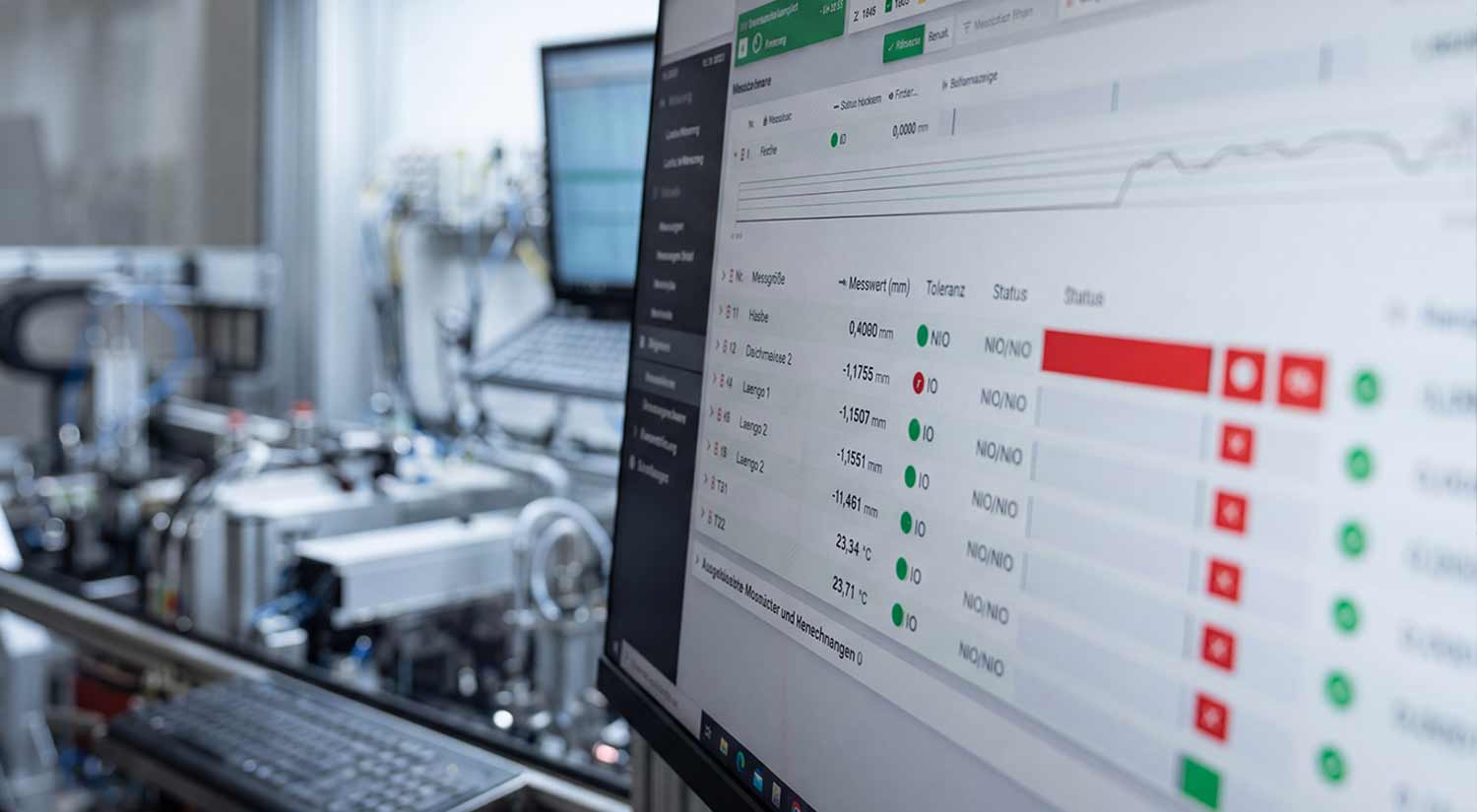
Process monitoring, tool and tool life analysis

Make tool usage, spindle load data, and process flows transparent – across individual machines, lines, and locations. All data regarding the machining process, tools, and machines is consolidated in a single web application, with rules that monitor critical load values and trigger notifications. The result: faster root cause analysis for anomalous parts or batches, reliable tool life evaluations, and a knowledge base that is shared across the company rather than locked away with individual experts.

Our references

Selected Case Study

Manufacturer of machine tools and laser technology

Development of modular machine operating software with an HMI framework

How we designed and developed a group-wide HMI framework for a 3D laser machine series for a leading international manufacturer of machine tools and laser systems.
  • Unified, intuitive interface for a group-wide machine series instead of individual solutions for each machine type
  • Interface and elements adapt individually to different display sizes
  • Agile project management with transparent costs and Clean Code coaching for sustainable development
tco-calculator

Total cost analysis for your software project

Unlock our TCO calculator for free now and put your software project to the test.

Typical challenges in software­projects and how we solve them

Challenges & Solutions

Unclear project scope: Scope, timeline, and budget are difficult to estimate before the project starts.
Upfront concept development: Assess risks and develop a reliable cost estimate – before development begins.
Lack of prioritization: Too many features, too little focus – in the end, many things are started, but nothing is truly finished.
Dual Track Agile: Parallelizing design and development – continuously prioritizing features based on business value.
Increasing compliance requirements: CRA, NIS2, ISO 27001 – regulatory pressure is growing, and retrofitting security is expensive.
Security-by-Design: Security and compliance requirements are integrated into the development process from day one.

Here's how we develop your custom software solution for the machine tool industry

DESIGN
Process Analysis & Ideation
1-2 weeks

Together, we analyze your processes and identify your use cases. From there, we develop ideas for software solutions. If you already have a specific idea, we evaluate it for business viability and technical feasibility.

DISCOVER
Concept Development & Knowledge Graph
4-8 weeks

We design your software solution at the intersection of biz, tech, and user requirements. The result is a sophisticated solution concept structured as a machine-readable knowledge graph – perfectly suited for development with AI agents.

DEVELOP
AI-driven Software Development
6-X months

Development in Dual Track Agile: In our AI development environment, AI agents handle routine tasks, code, and testing according to clean code standards. Our experts continuously design, verify, and enrich the knowledge graph.

DEVOPS
Support & Maintenance
continuously

We operate and maintain your software, monitor system performance, and ensure sustainable, secure operation through regular updates and ongoing technological development.

Your benefits

AI-driven development makes coding up to 3x faster

AI-driven software development accelerates implementation – standards and clean code ensure that speed does not come at the expense of maintainability.

Over 25 years of enterprise experience

For over 25 years, we have been developing custom software for the industrial sector, combining deep industry expertise with a collaborative, peer-to-peer approach.

No hidden Lock-In

The source code, concepts, designs, and AI development environment belong to you – they are readable and can be further developed with other partners at any time.

We protect your investment with Clean Code

Whether using AI or done by hand – Clean Code is our standard. This ensures that your software remains flexible and expandable even years down the road.

Software development in Dual Track Agile

Design and development proceed in parallel – only what has been validated and generates added value is developed.

Compliance-driven development

ISO-compliant processes and CRA readiness are built in – compliance from the start, not as a costly add-on.

User-centric design from the start

Prototypes and usability tests before any code is written – for software that users embrace and that delivers a return on investment.

Experts in every project role

Our employees are experts in their fields, receive ongoing training, and have a generous annual training budget.

API-first

Clearly define interfaces so that ERP, MES, and machines can work together seamlessly and scalably.

Your entry to custom software for machine tools: just a phone call away.

If you would like to know which data we process and how long we store it, you can find further information in our Privacy statement.
Your data is transmitted in encrypted form
Thank you so much! We have received your contact request!
Oh no! Something went wrong. Please try again!
Jörg Lenz
Key Account Manager
faqs

The most common questions regarding software projects in machine tool engineering

When is custom HMI software worth it compared to a standard HMI platform?

A standard platform is the right choice if the machine fits its operating logic and protocol ecosystem: faster rollout, lower implementation risk, and a familiar interface for maintenance. Custom operating software is worthwhile when the operating concept becomes a key differentiator for the machine, when interface and database solutions must remain flexible, when per-machine license costs impact unit costs, or when a single interface needs to support an entire product line. The most common objection to custom software is the dependency on individual specialists for maintenance. This risk arises from a lack of standards, not from custom development: clean code is our company standard, ensuring your software remains adaptable even ten years from now.

How can we prevent new HMI software from becoming a step backward for machine operators?

Usability usually suffers when an interface is designed from a technical perspective rather than from the workflow: the look may be more modern, but setting up, programming, or switching between offsets requires more steps than before. This can only be prevented before implementation. That is why we create wireframes, click-dummies, and conduct usability tests before any code is written. Each increment is followed by user testing, and the operating personnel see the product long before the go-live. In a similar project, this measurably reduced training effort, operator errors, and measurement inaccuracies.

How can we consolidate the user interface for multiple machine series?

Through a modular HMI framework. Common components such as navigation, permissions, diagnostics, or parameterization are centralized, while machine-specific modules are added as needed. The interface and controls adapt to different display sizes. This way, your customers operate every machine in your series using the same pattern, and you maintain one software base instead of a chaotic sprawl for each machine type.

Can machine software that has grown over many years be modernized without jeopardizing ongoing operations?

Yes, usually step-by-step rather than through a complete rewrite. The hardware-related portion, validated over years, is the most expensive and riskiest to rewrite. We encapsulate it behind a defined interface and modernize everything around it first. It is replaced piece by piece, with pre-agreed criteria for behavioral parity, and every step is deployable. Where knowledge resides only in a few heads, we document the behaviors that must be preserved before replacing them and secure them with tests. Existing WPF applications are not automatically legacy – switching to current .NET is often the lowest-risk first step. If the existing system can no longer support the requirements, a new design is more cost-effective than further patching: that was exactly the case for a configurator that had grown over 30 years.

Can existing controllers and machines be connected?

Yes. We have experience integrating controllers, sensors, and measurement hardware via OPC UA, fieldbuses like Profinet and Profibus, as well as proprietary interfaces. Machine and process data are processed efficiently and transferred to MES, ERP, CAQ, or cloud platforms. Existing infrastructure is not replaced wholesale but rather integrated into a cohesive software landscape.

What internal resources does a typical software project in machine tool manufacturing require?

Typical points of contact include product/development, application engineering or service, IT, and, if necessary, maintenance or quality assurance. The team size is less critical than having clear responsibilities and decision-making paths. Technical expertise is just as important as know-how regarding integration and operations. Regular communication between all stakeholders contributes significantly to success.

How can the effort be estimated before committing a budget, and how long does implementation take?

Through a dedicated, limited phase prior to development. Our preliminary concept development lasts between two and twelve weeks and concludes with a validated solution concept, click-dummies, a prioritized backlog, and an implementation plan. We classify requirements beforehand so it is clear which parts of a proposal are reliable and which still require research. A fixed price for an unclear scope is merely an illusion of security – a fixed budget with a flexible scope is more sustainable. The development itself takes anywhere from a few months for focused enhancements to multi-year timelines for group-wide frameworks or the replacement of legacy platforms, depending on the scope and depth of integration.

What compliance documentation will machine software need to provide in the future?

With the Cyber Resilience Act, mandatory requirements will apply from 2027 that affect the entire development process, not just the finished product: a Software Bill of Materials, documented vulnerability management, and update capabilities throughout the product lifecycle. Depending on the field of application, ISO 9001, IATF 16949, NIS2, as well as audit trail and data integrity requirements may also apply. Anyone who waits until 2027 to adjust their development processes will be too late. We therefore integrate security and compliance requirements into architecture and delivery from day one, rather than patching them on later.

What should be the scope of an initial software project in this environment?

Small and clearly defined: a manageable use case with recognizable value – e.g., specific measurement processes, a pilot customer, or a clear service use case. The goal is to gain quick, well-founded insights and experience with technology, organization, and interfaces. Starting this way reduces risks and makes the actual value easier to evaluate. Afterward, the software can be expanded in a targeted manner – adding more processes, machines, regions, data sources, or functions.

How long does it take to implement a software project like this?

The duration depends heavily on the scope, the existing system landscape, and the integration effort – ranging from a few months for focused enhancements to longer timelines for comprehensive platforms or numerous interfaces. Pilot projects provide reliable results early on and help to realistically assess effort and roadmaps.

Who operates and maintains the software after the project is completed?

Both paths are possible, and the decision doesn't have to be made at the start of the project: we can handle operations, maintenance, and further development – or your team can do it themselves, gaining the necessary skills during the project through clean code workshops, on-the-job training, and the establishment of a product owner role. In a similar project, the client is now continuing to develop their software with their own internal team. Contractually, both cases apply: you are never locked in with us; exit clauses and escrow are standard.

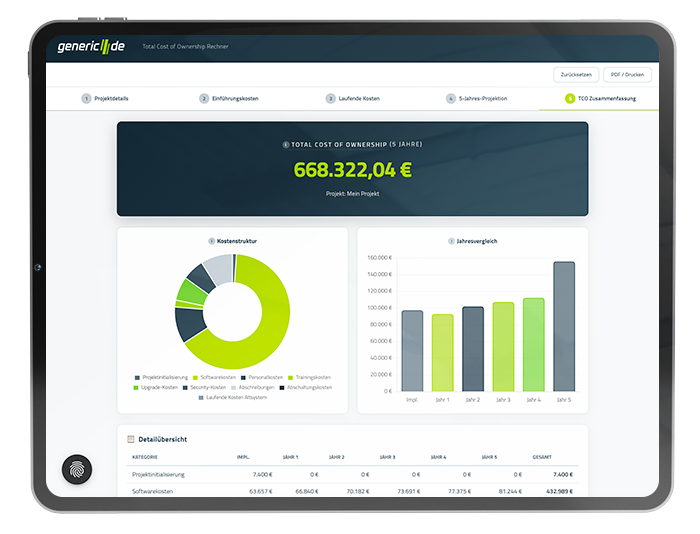
Abbildung unseres TCO-Calculators zur Software-Kosten-Analyse auf einem Tablet

Unlock TCO calculator now

Our TCO calculator helps you analyze the total cost of ownership for your software project – whether it's custom development, an on-premise solution, or SaaS.

If you would like to know what data we process and how long we store it, you can find further information in our privacy policy.
Your data will be transmitted in encrypted form
Thank you! We have received your contact request.
Oh no! Something went wrong. Please try again!

Industrial AI: 20 real-world use cases

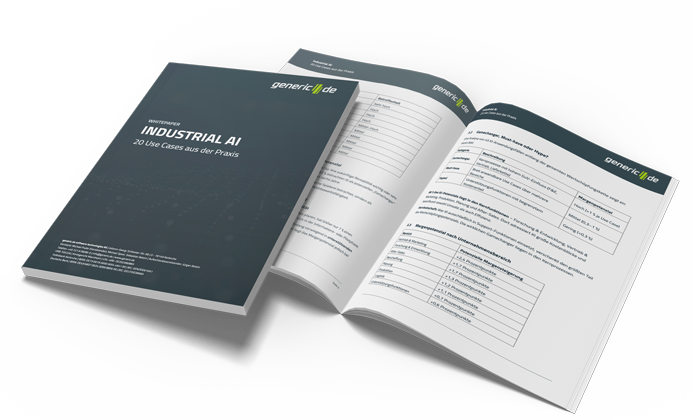
AI in industry is no longer a topic for the future, but where is it really worth getting started? This whitepaper presents 20 anonymized real-world examples of where AI is delivering measurable value in core processes today – from quality assurance and predictive maintenance to intelligent production planning.

If you would like to know what data we process and how long we store it, you can find more information in our privacy policy.
Your data will be transmitted securely
Thank you! We have received your contact request!
Oh no! Something went wrong. Please try again!
WHITEPAPER

Industrial AI: 20 real-world use cases